





Find the risk before the outage
See how Gremlin helps teams see where systems will fail, fix them first, and prove the results.
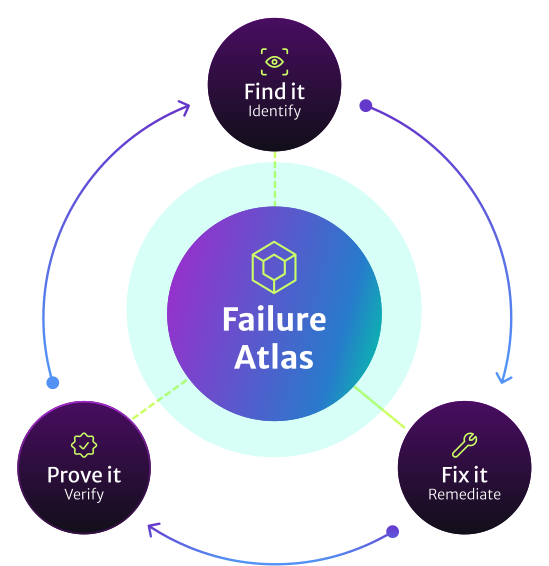
Gremlin replaces backward-looking incident metrics with forward-looking reliability scores based on how your systems actually respond to failure—so your teams can see where systems will fail, fix them first, and prove the results.

When every metric in your reliability stack—incident counts, MTTR, uptime—is backward looking, you only see what already went wrong. The result: strategic decisions driven by lagging data, resilience investments that go unvalidated, and gaps that only surface after an outage.
Gremlin gives you a standardized, scalable way to measure, manage, and improve the reliability of your services. Instead of waiting for incidents to tell you what's broken, Gremlin shows you what will break and proves your fixes are working.

Gremlin combines passive risk detection, dependency discovery, and resilience and chaos testing to give you a forward-looking view of service and application resilience.
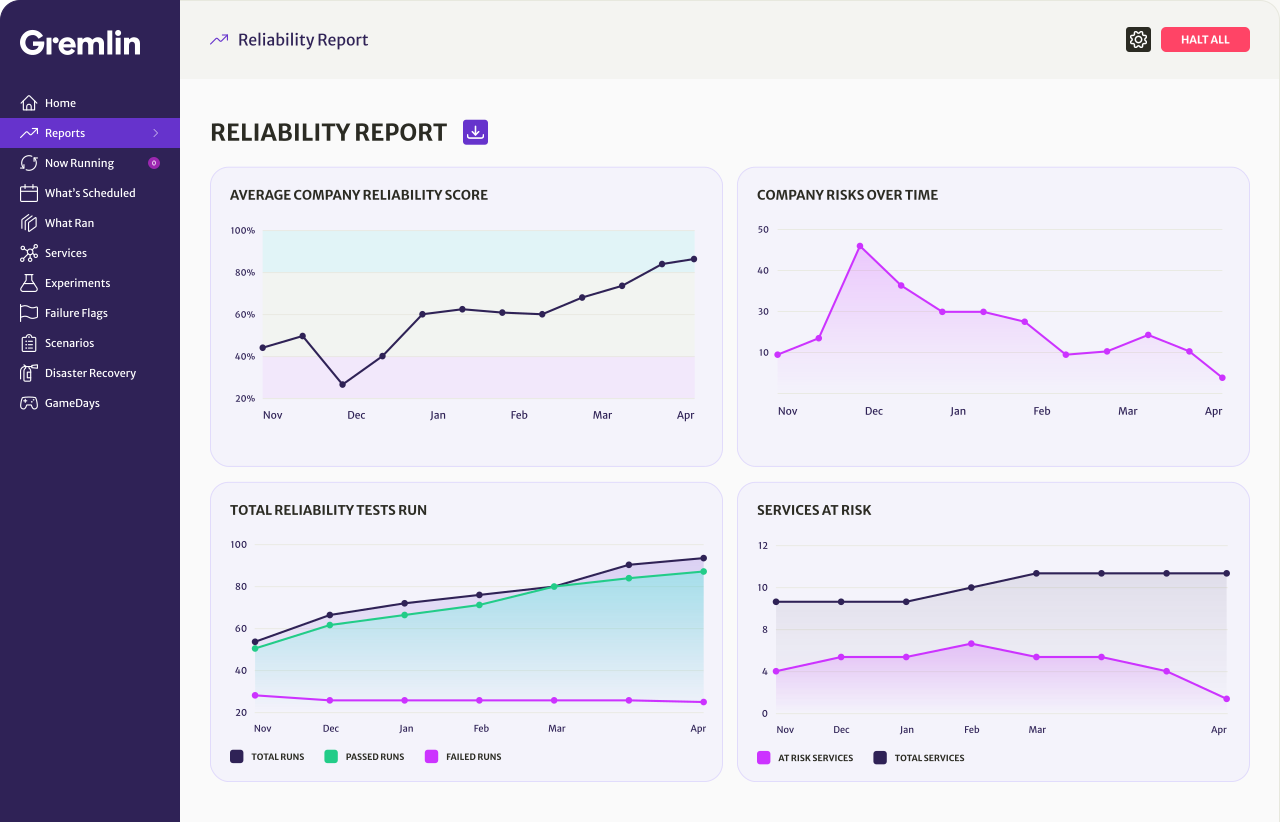
Track results with aggregate reliability scores
Prove your resilience mechanisms actually work
Uncover configuration drift and hidden vulnerabilities
See and test hidden dependency failure paths
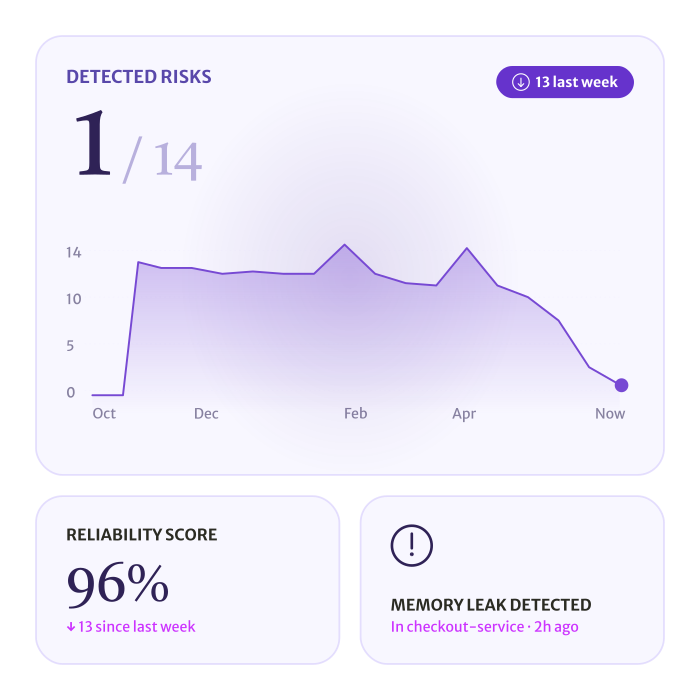
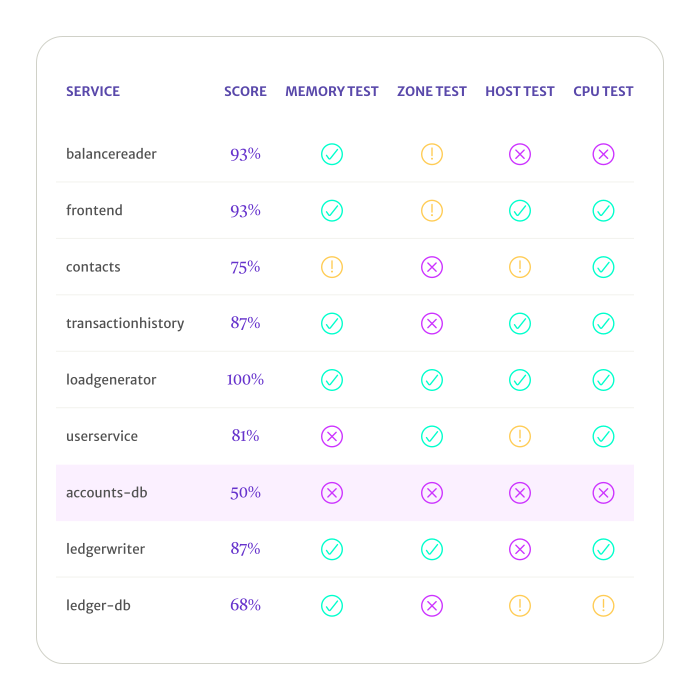
Define your reliability baseline with test suites, empower teams to perform their own testing, then benchmark services against your standards to give executives the data to fund the right investments.
Define and enforce standards with reliability test suites
Benchmark services and teams across your organization
Make reliability measurable and fundable with executive-ready reporting
Manage reliability across all architectures, including multi-cloud, serverless, microservices, on-prem, and more


Combine AI-powered expert recommendations with automated testing and reliability tracking to fix risks quickly, continuously verify results, and show measurable improvements.
Tap into expertise on what to test and how to interpret results from resilience pioneers at the world’s most trusted enterprises
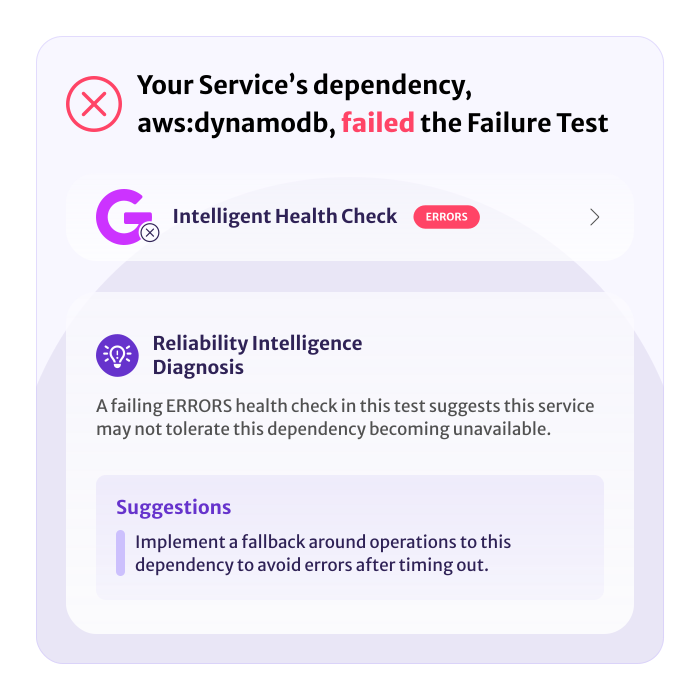
Fix faster with targeted remediation guidance
Close the loop between fixes and proof with continuous tracking
Create reliability guardrails to enable AI-accelerated deployment cycles without impacting downtime
Major US insurer
Top 5 global bank
Top 5 US bank, 100M customers
on new platform migration

Arul Martin
Director of Performance Engineering
Sephora


This is the most common concern we hear—and it's usually backwards. Waiting until you're "ready" for reliability engineering is like waiting until you're in shape to start exercising. Gremlin is how you get there. Built-in safety mechanisms and guided onboarding ensure you can start without risk. The real risk is waiting.
If things are already failing unpredictably, you don't have reliability—you have uncontrolled risk. Gremlin doesn't add randomness. Our approach is engineer-driven and methodical: targeted test coverage, safe execution, controlled blast radius, and a deliberate path into production.
Chaos engineering can mean different things to different organizations, and the word "chaos" implies randomness. Gremlin takes a structured, engineer-driven approach focused on test coverage, safety, and scaling reliability practices from development through production. The goal isn't to break things randomly—it's to give you a complete, honest picture of your reliability so you can make informed decisions about where to improve.
Most organizations see their first reliability scores within days of deployment. Gremlin's guided test suites and automatic risk detection mean you get actionable findings immediately—not after months of configuration. Teams typically identify their first critical gaps within the first week.
Gremlin integrates with and works alongside the tools you already use—monitoring, observability, CI/CD, and incident management platforms. It adds the proactive, forward-looking layer that those tools can't provide on their own. Your existing stack tells you what happened; Gremlin shows you what will happen.
See how Gremlin helps teams see where systems will fail, fix them first, and prove the results.